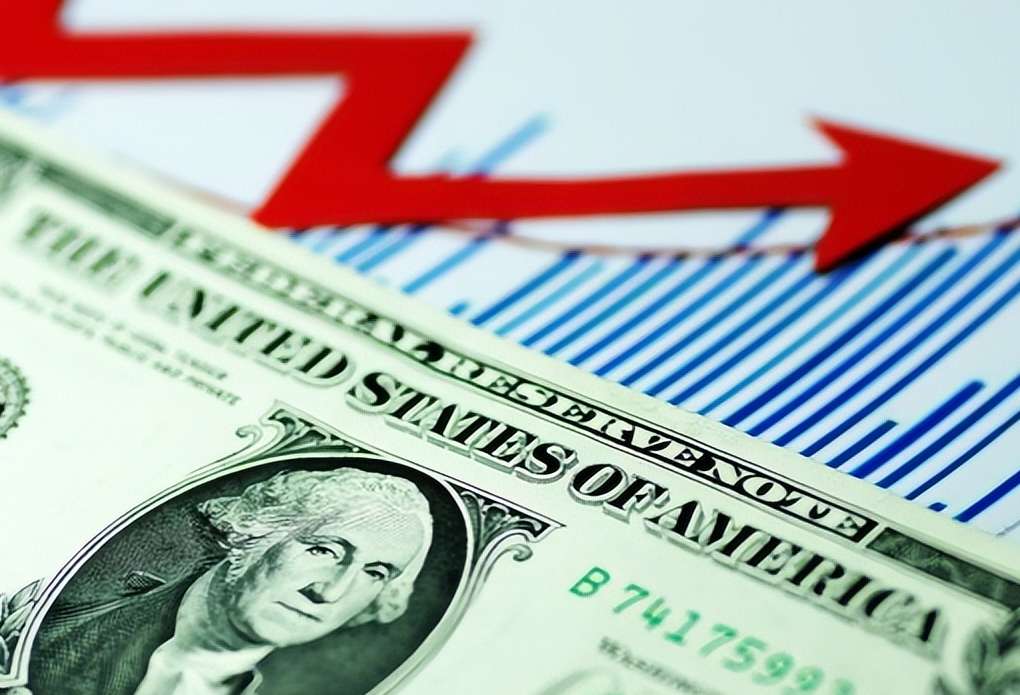
Let's cut through the speculation. The idea of Europe collectively offloading its massive holdings of US Treasury bonds is often tossed around as a geopolitical nuclear option. But what actually happens if Europe dumps US bonds? The short answer is messy, painful, and self-defeating for everyone. It's not a clean financial victory; it's a chain reaction where the first domino to fall might be Europe's own economic stability. This isn't about a single central bank tweaking its reserves. We're talking about a coordinated sell-off by the Eurozone's major players—the ECB, Germany, France, Italy—which together hold trillions. The shockwaves would ripple through currency markets, interest rates, and global trade in ways that most headlines oversimplify.
What You'll Learn
Why Europe is Sitting on a Mountain of US Debt in the First Place
You don't accidentally end up holding trillions of another country's debt. Europe's massive position in US Treasuries isn't a sign of submission; it's a calculated, if reluctant, dependency on the system's architecture.
The core reason is the US dollar's role as the world's primary reserve currency. Think about global trade: oil, commodities, major contracts are priced in dollars. To facilitate this trade and manage their own financial systems, central banks need a deep, liquid pool of dollar-denominated assets. US Treasury bonds are that pool. They're considered the ultimate safe-haven asset—backed by the world's largest economy and its taxing power. According to the International Monetary Fund (IMF), the dollar still makes up about 59% of global foreign exchange reserves.
For the European Central Bank (ECB) and national banks, holding US bonds provides crucial diversification. The euro is their home currency, so loading up only on European debt (like German Bunds) concentrates risk. US bonds offer a return and a hedge. It's a pragmatic, not a political, choice. Ditching them means finding an alternative of similar size, liquidity, and perceived safety. That alternative simply doesn't exist today—not the euro, not the Chinese yuan, not gold. The market for euro-denominated sovereign debt is fragmented across 20 different issuers, none matching the US Treasury market's scale.
How Would a "Dump" Actually Unfold? (Spoiler: It's Not a Fire Sale)
The term "dump" implies a sudden, panicked sell-off. In reality, a deliberate, strategic move by Europe would look different. They wouldn't announce it on a Monday morning and flood the market. It would be a slow, deliberate, and likely covert process to minimize immediate losses.
Imagine this scenario: The ECB and key national banks, in response to a severe geopolitical rupture, decide to reduce their collective exposure by, say, $500 billion over 12-18 months. They'd use a combination of methods:
- Allowing Bonds to Mature Without Reinvestment: The quietest method. As bonds they hold reach their maturity date and the US government pays back the principal, they simply don't use that cash to buy new bonds. This slowly shrinks the portfolio without a single sell order hitting the market.
- Stealthy Sales in the Secondary Market: Executing sell orders through multiple intermediaries, in smaller chunks, to avoid tipping off other major players like Japan or China, who might front-run the trade.
- Swaps and Derivatives: Using financial instruments to synthetically offload the economic exposure without physically selling the bond, though this has limits.
The goal would be to engineer a managed decline, not a crash. But even a "managed" sell-off of that magnitude would send unmistakable signals. Bond traders and algorithmic systems would detect the persistent selling pressure. The news would leak. The psychological impact—the signal that a major, traditional buyer was now a permanent seller—would be as powerful as the economic one.
The Immediate Market Carnage: Dollar Dive and Rate Spike
Let's trace the dominoes. Europe sells bonds for dollars. They now have a huge pile of USD cash. What do they do with it? They'd likely convert a significant portion into euros to bring the money home or into other assets (gold, other currencies). This massive EUR-buying/USD-selling operation directly weakens the dollar.
A sharply weaker dollar has immediate, global consequences:
| Impact Area | Direct Consequence | Secondary Ripple |
|---|---|---|
| US Inflation | Imported goods (electronics, apparel) become more expensive for Americans. | The Federal Reserve may be forced to raise interest rates more aggressively to combat inflation, slowing the US economy. |
| Global Commodities | Oil (priced in USD) becomes cheaper for Europe but more expensive for others. | Volatility spikes in energy markets, hurting emerging economies with dollar debts. |
| US Treasury Market | The massive new supply from Europe pushes bond prices DOWN. | Bond yields (interest rates) RISE sharply. Mortgage rates, corporate loan rates—everything tied to US Treasuries gets more expensive. |
This last point is critical. The US government finances its debt by constantly issuing new bonds. If Europe, a historic buyer, turns into a big seller, the US Treasury must find new buyers. To attract them, it must offer higher interest rates. This isn't a minor adjustment. We're talking about a potential rapid rise in the 10-year Treasury yield, which serves as the benchmark for global credit.
The Fed would be in a nightmare bind: fight the inflation from a weak dollar with higher rates, or support the collapsing bond market? Either choice risks triggering a US recession.
Europe's Nasty Self-Inflicted Pain: The Blowback
Here's the part many miss. Europe wouldn't emerge unscathed. This is where the self-harm comes in.
First, the euro would soar. All that dollar-to-euro conversion would make the eurozone's currency brutally strong. German exporters? They'd scream. A BMW or a French wine suddenly becomes much more expensive for American and Asian buyers. The Eurozone's export-driven economy, particularly Germany's, would take a direct hit, potentially plunging the region into a recession it can ill afford.
Second, their remaining holdings get torched. Remember, as they sell and yields rise, the market value of the US bonds they still hold plummets. Their own central bank balance sheets, loaded with those now-depreciated assets, would show massive paper losses. This undermines their financial credibility and could complicate their monetary policy operations.
Third, global financial instability hurts Europe most. The Eurozone is deeply integrated into global finance. A US recession caused by a bond market crisis would slash demand for European goods. European banks hold dollar assets and are active in US markets. A credit crunch on Wall Street quickly becomes a credit crunch in Frankfurt and Paris.
Let's be clear: this isn't a one-way street. A dump is a mutual assured financial destruction scenario. The pain for the US would be acute and immediate in markets. The pain for Europe would be slower-burning but structurally damaging to its economy.
The More Realistic (and Sneaky) Scenario
Given the mutual harm, an outright dump is a last resort. The more realistic path is what we're already seeing: a gradual, long-term diversification away from dollar dominance.
Europe won't dump, but it will slowly reduce its relative reliance. You see this in the ECB's subtle shifts. They might:
- Increase the share of yen or Canadian dollars in reserves by a percentage point.
- Push for more euro-denominated trade deals, especially for energy (a process already inching forward).
- Support the development of deeper European capital markets to create a more viable alternative to US bonds for global savings.
This isn't a dramatic explosion. It's a slow leak, designed to reduce vulnerability over decades, not months. The goal isn't to topple the dollar but to build a slightly more balanced, multipolar system where Europe has more autonomy. This gradual shift, while less cinematic, is the true strategic threat to dollar hegemony—not a one-off fire sale.
Your Burning Questions Answered
Would the ECB ever really use US bond sales as a geopolitical weapon against the US?
If yields spike, wouldn't that attract other buyers to snap up "cheap" US bonds?
What's the one subtle mistake analysts make when modeling this scenario?
As a European investor, how should I protect my portfolio from this kind of systemic risk?
- Physical gold (a traditional non-sovereign store of value).
- Real assets in stable, non-aligned economies (e.g., infrastructure in certain APAC regions).
- High-quality corporate bonds in sectors less sensitive to currency wars.
The goal isn't to bet on a dump, but to ensure your portfolio isn't overly reliant on any single geopolitical relationship blowing up. It's about resilience, not prediction.